
Taking Charge of Your Bone Health: Why Early Assessment and Prevention Matter
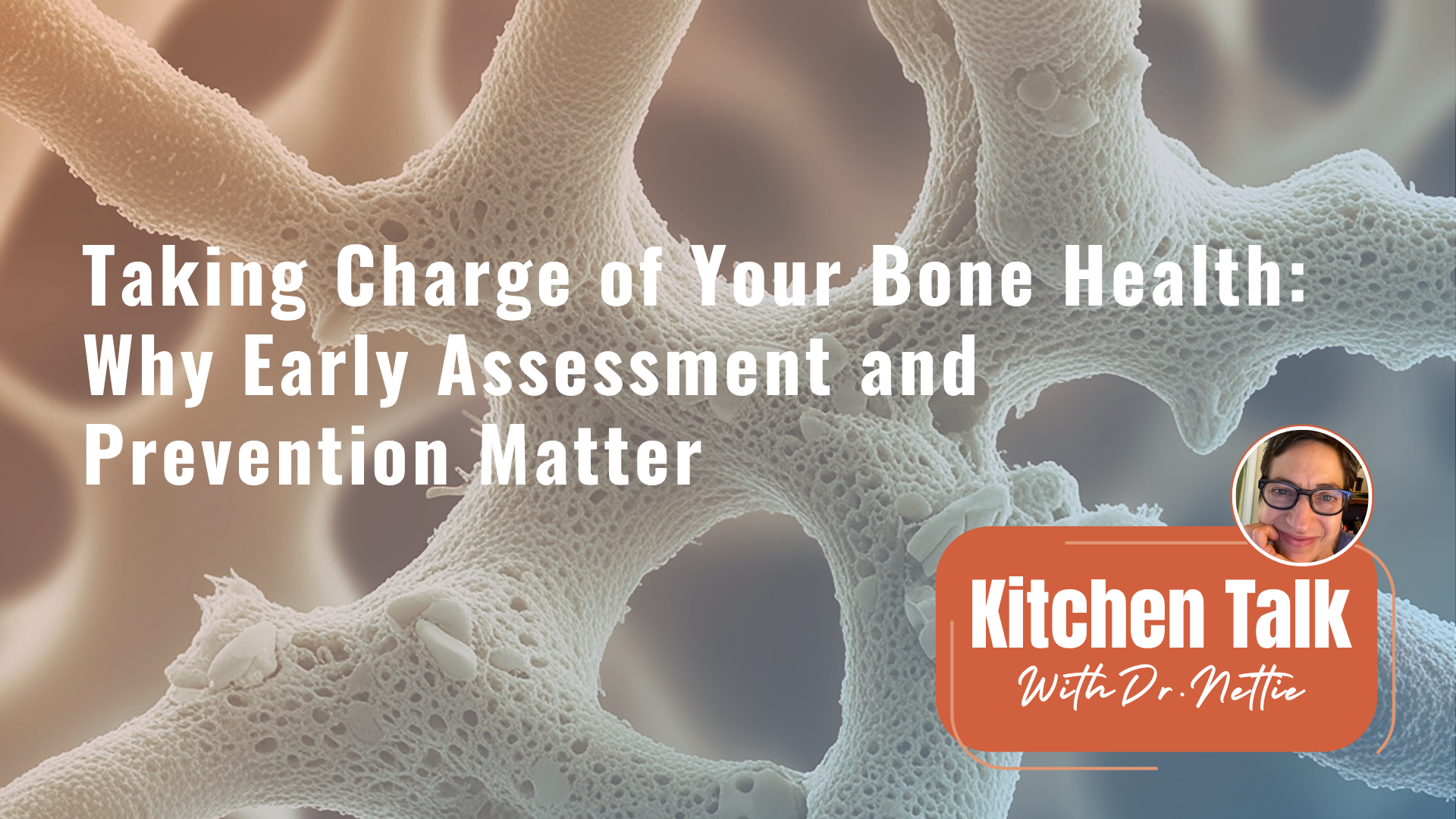
As a clinician, my priority is your long-term health and independence. Bone health is often overlooked until a fracture occurs, but research shows that early, proactive assessment — especially around the menopausal transition — is essential for prevention.
What Is Bone Density, and Why Does It Matter?
Bone density measures how strong your bones are. Your bones reach their maximum strength — called "peak bone mass" — by your late 20s, then gradually decline. Osteoporosis occurs when bones become so thin they can break from a minor fall or even everyday activities like bending or coughing. Hip fractures are especially serious — about 1 in 3 people who break a hip will die within a year, and many others lose their independence. Half of all women over age 50 will experience an osteoporotic fracture in their lifetime.
What Happens to Your Bones During Menopause?
Estradiol — your body's natural brake on bone breakdown — drops during the menopausal transition (typically ages 45–55), causing bone loss to speed up dramatically. During the few years surrounding your final menstrual period, you can lose bone at 2–3% per year — roughly 10 to 20 times faster than before menopause. By five years after menopause, the average woman has lost about 10.5% of her spine bone density and 9.1% of her hip bone density.
Why Should You Know Your Bone Density Before Menopause?
Most doctors recommend that females get their first DXA scan at age 65, but by that time, the most rapid bone loss has already occurred—and the optimal window for prevention may have passed.
Your bone density before menopause is the single most important factor in determining future osteoporosis risk. A landmark study found that 10% higher peak bone mass can delay osteoporosis by about 13 years. The SWAN study showed that females entering menopause with below-average bone density and faster-than-average bone loss had nearly three times the fracture risk compared to those with higher starting density and slower loss. Knowing your status before or at the start of menopause allows us to intervene at the most effective time.
Think of bone density like a savings account: if you enter menopause with a low balance, just a few years of rapid withdrawal can leave you at significant risk.
How We Assess Your Fracture Risk Together
DXA scan: Measures bone density and gives us your T-score.
Trabecular Bone Score (TBS): An advanced tool obtained from the same DXA scan, TBS measures the quality of bone microarchitecture. TBS is FDA-cleared, covered by Medicare, and predicts fracture risk independently of bone density. It is especially useful when density is mildly low or in the perimenopausal years.
FRAX (Fracture Risk Assessment Tool): Combines your DXA result and TBS with other risk factors — age, weight, previous fractures, parental hip fracture, smoking, alcohol, steroid use, and certain medical conditions — to estimate your 10-year fracture probability. This combined approach helps us zero in on the right treatment strategy for you — whether that means lifestyle measures and monitoring, hormone therapy, preventive medication, or more aggressive bone-building therapy.
These tools together give us a comprehensive picture — how much bone you have, the quality of that bone, and your individualized risk — so we can tailor prevention and treatment.
If You Are Already Past Menopause
It's not too late. Bone loss continues after menopause, and fracture risk rises with age. Make sure your DXA scan is up to date. We can review your TBS and FRAX score to ensure your prevention or treatment plan fits your current needs.
Who Should Consider a Bone Density Scan Before Age 65?
I recommend all peri- and postmenopausal females get a DXA scan, since estrogen deficiency is a significant risk factor. Ideally, I'd like to see a baseline DXA by age 40 if possible.
Additional risk factors:
Early menopause (before age 45) or surgical removal of ovaries
Parent with a hip fracture before age 80
Low body weight (under 127 lbs)
History of missed periods for more than a year before age 42
Smoking
Long-term steroid use (like prednisone)
Medical conditions affecting bone (rheumatoid arthritis, celiac disease, thyroid disorders, eating disorders)
Previous fracture from a minor injury
If you have any of these risk factors, we should discuss early DXA screening and a personalized prevention plan at your next visit.
Who Else Is at Risk? It's Not Just Women
Men and transgender and gender-diverse individuals can also be at risk for osteoporosis.
Men experience bone loss later in life, but certain medical conditions, medications, or hormonal changes can accelerate this process. I assess all men for risk factors and suggest DXA as indicated.
For transgender and gender-diverse individuals, bone health deserves special attention. Transgender women often have lower bone density than cisgender men even before starting hormone therapy — one study found about 22% had low bone density before treatment began. The good news is that feminizing estrogen therapy generally maintains or modestly increases bone density, and a large 10-year follow-up study found no negative effects with continued treatment.
Transgender men generally maintain normal bone density on testosterone therapy, partly because testosterone converts to estradiol in the body. As with transgender women, maintaining consistent hormone therapy is important. If you are a transgender or gender-diverse patient, together we can determine whether bone density screening is appropriate and ensure your bone health is monitored as part of your overall care.
The Bottom Line
Osteoporosis is a "silent disease" — bones weaken without symptoms until a fracture occurs. Knowing your bone density before or at the start of menopause allows you to act before problems arise.
Next Steps: Let's Be Proactive Together
If you are approaching menopause, are postmenopausal, or have risk factors for bone loss, I encourage you to schedule a follow-up appointment. Together, we can:
Order a DXA & TBS scan if you have not had one
Review your individual risk factors
Discuss the latest evidence-based options for prevention and treatment
Develop a personalized plan to protect your bone health and overall well-being
Your health and independence are worth investing in. Let's take action now to ensure strong, healthy bones for years to come. Schedule your appointment today.
We are in this together,
Dr. S
About Kitchen Talk with Dr. Nettie
A fresh, interactive series where Dr. Annette “Nettie” Sacksteder brings everyday health conversations back to where they naturally happen—the kitchen. Each short video tackles a simple, curiosity-driven question about food, lifestyle, movement, or home-based well-being, delivered with Nettie’s signature warmth, creativity, and playfulness. Expect approachable insights, quick tips, and the occasional song or dance, all designed to spark healthier choices in real life.
From patient questions to family banter, Kitchen Talk turns those casual “Ask Nettie!” moments into practical wisdom for everyone. Join in, send your own questions, and be part of a growing conversation about living well—one small, meaningful step at a time.